
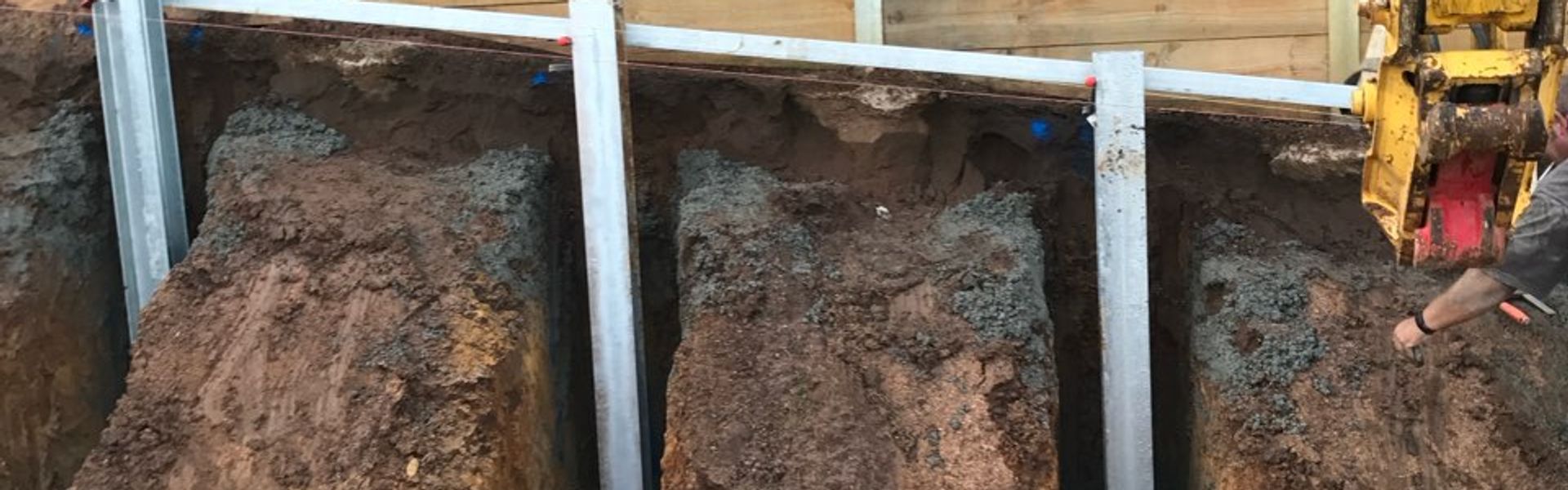
Excavating along a boundary is the riskiest part of most retaining wall jobs. Your neighbour’s fence, shed or house footings sit just the other side of the line — and if the ground under them moves because of your dig, the damage (and the bill, and the neighbourly relations) lands on your side. It’s a risk we take seriously, which is why Just Walls specialises in staged construction for boundary retaining walls across Geelong.
Why boundary excavations go wrong
Soil holds itself up until you take away what’s beside it. Cut a long, open trench right along a fence line and the ground behind it has nothing to lean on — fences sag into the excavation, footings crack, and in the worst cases a neighbouring structure is undermined. Protecting adjoining property during excavation is the responsibility of the people doing the digging, and for deeper cuts near structures an engineer will often specifically require a staged approach.
What staged (hit-and-miss) construction means
Instead of opening up the whole wall line at once, we excavate and build in alternating bays — dig one, skip one — so there is always undisturbed ground supporting the fence line above. The soil left between the excavated bays acts as a series of piers holding everything in place while posts are set in concrete.
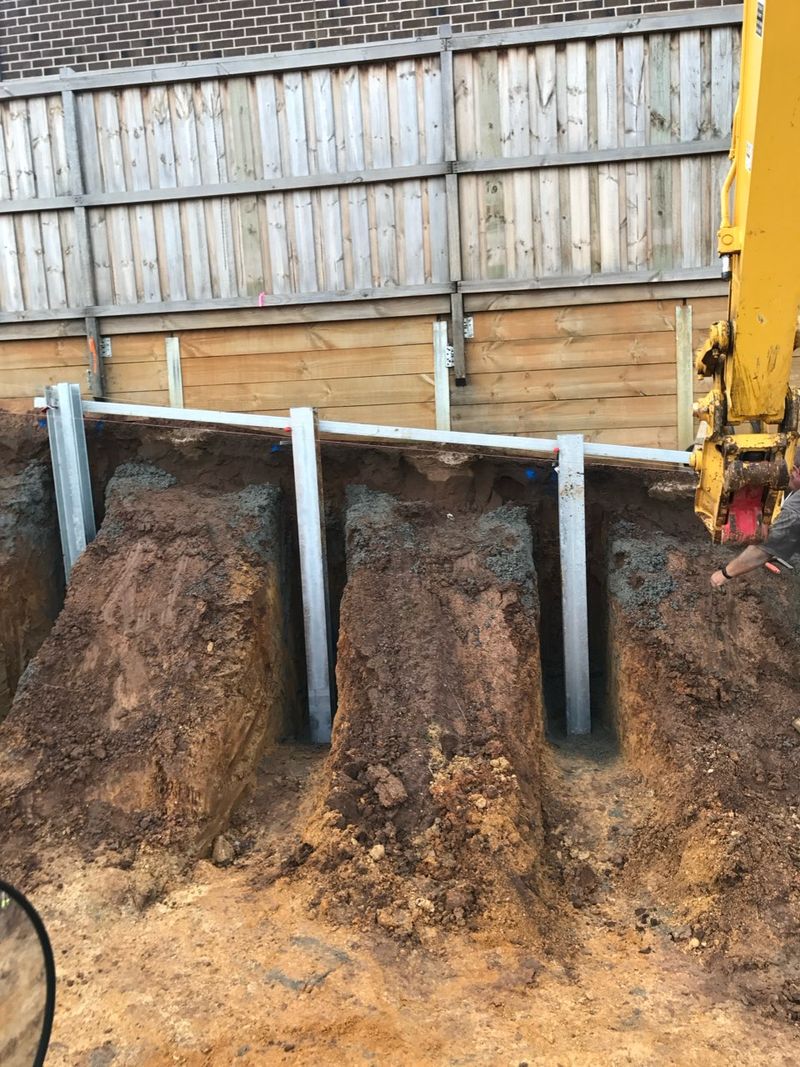
How we build a staged boundary wall
- Set out the wall line and mark the bays — sized to the ground conditions and the engineer’s requirements.
- Excavate the first set of alternating bays, leaving solid soil piers between them.
- Stand galvanised steel posts in the open bays and concrete them in.
- Once the concrete has cured and the first posts are carrying load, excavate the remaining bays and set their posts.
- Install the sleepers behind the posts, working along the wall.
- Add drainage aggregate and agricultural pipe, then backfill and compact.
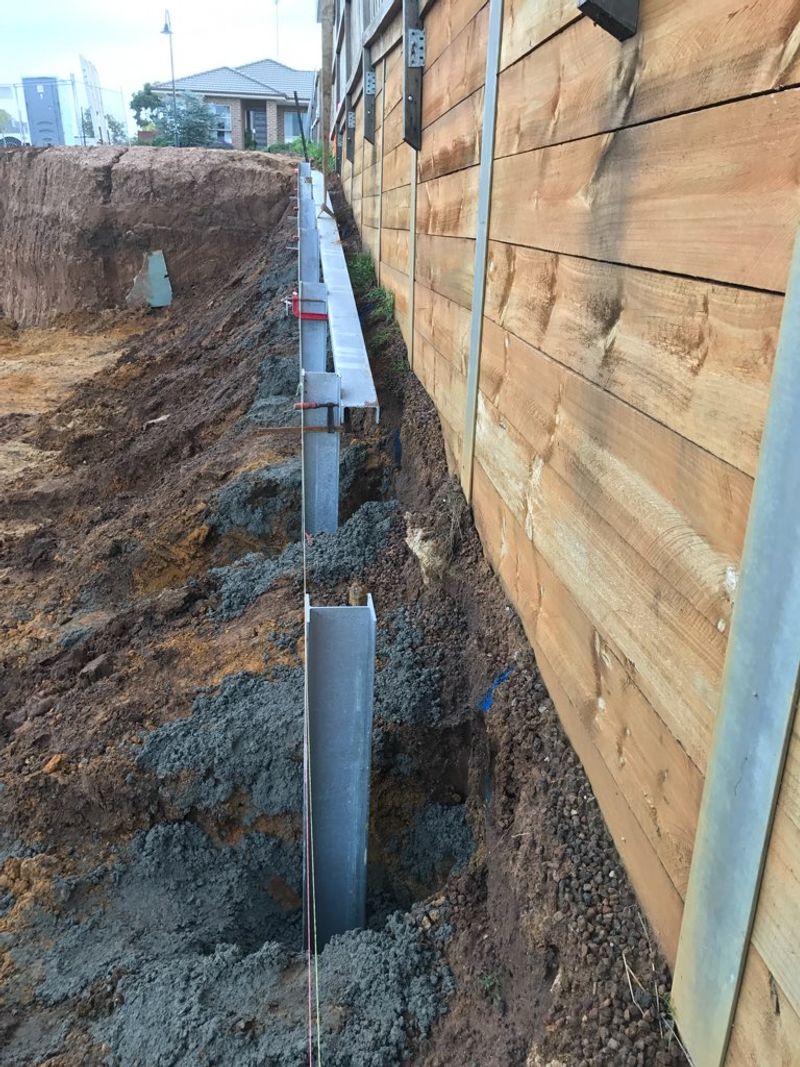
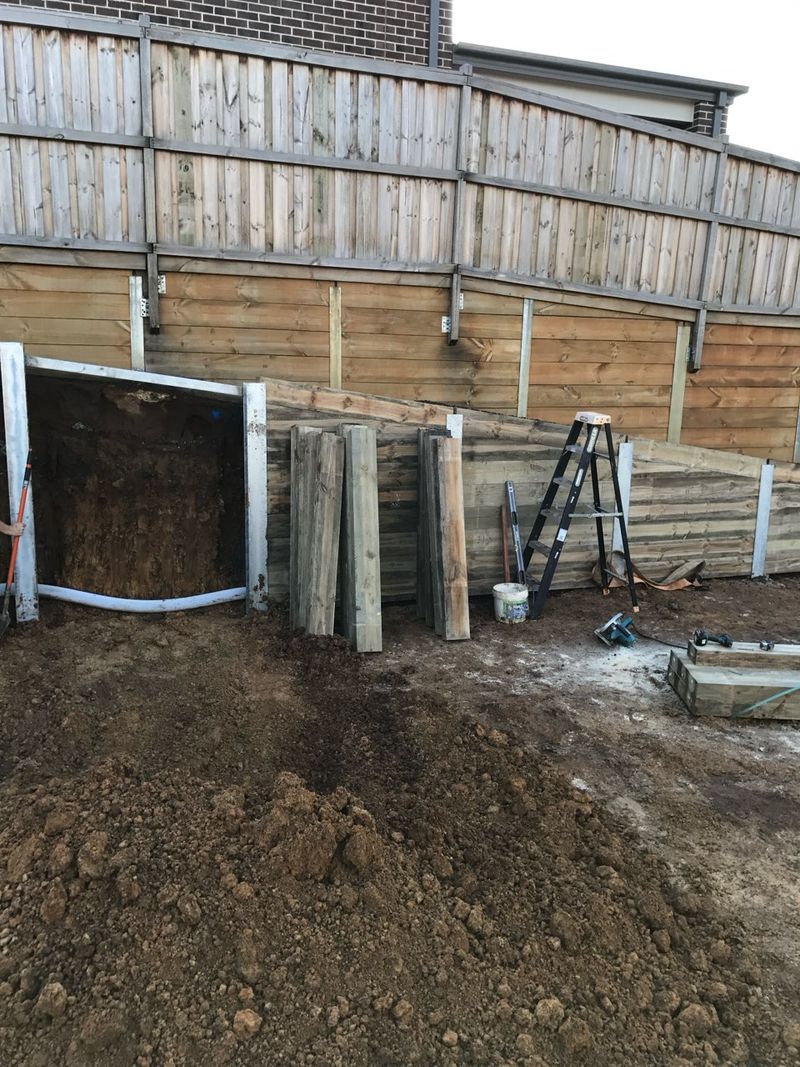
The result: a new wall, an untouched fence
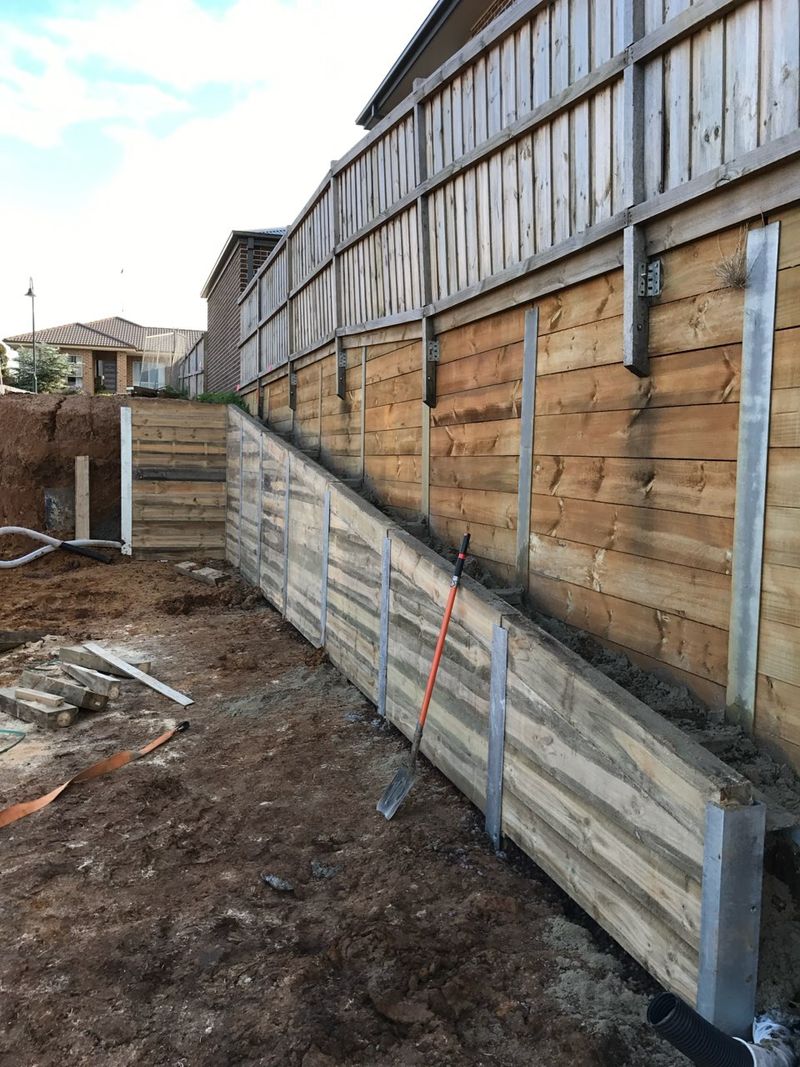
The finished wall looks no different from one built in a single pass — but the fence above it never moved, no neighbouring ground was left unsupported at any point, and there were no awkward conversations over the fence. On the job pictured here, the neighbour’s paling fence and the homes behind it sat directly above a full-height cut for the entire build.
When staged construction is the right call
- Cuts running along or near a boundary fence
- Excavation within the zone of influence of a neighbouring structure — sheds, garages, house footings
- Full-height cuts below existing properties on sloping blocks
- Anywhere the engineering drawings specify staged excavation
If your project involves digging near a boundary, talk to us early — staging affects how the excavation is planned from day one. See our excavation services or call 0412 445 393 for a free site assessment.